


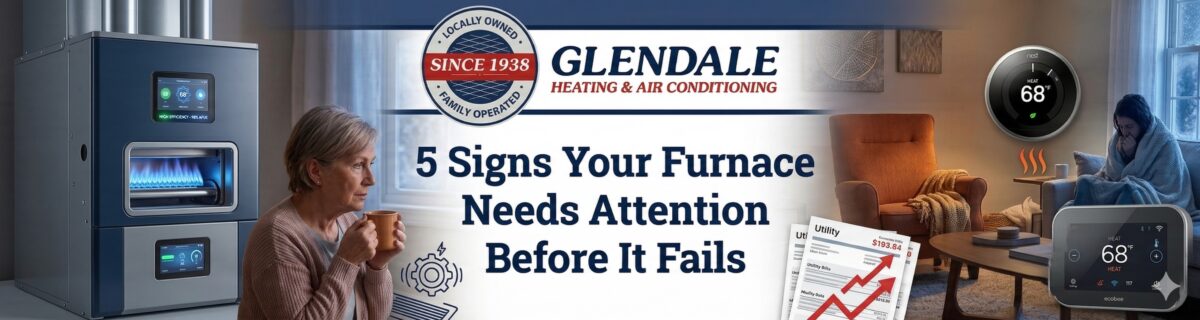
Your furnace works hard to keep your Seattle home comfortable through the long, damp winters — but like any mechanical system, it will give you warning signs before it gives out completely. Catching these early can save you from an emergency repair call, a freezing-cold night, or a much bigger replacement bill.
Don’t wait for a breakdown on the coldest night of the year. Here’s what to watch for:
1. Your Energy Bills Are Climbing for No Clear Reason
If your heating costs are noticeably higher than last year but your usage habits haven’t changed, your furnace may be losing efficiency. As furnaces age or develop problems — a cracked heat exchanger, a dirty burner, a struggling blower motor — they have to work harder to produce the same amount of heat. That extra effort shows up directly on your utility bill.
2. Uneven Heating Throughout Your Home
Are some rooms toasty while others stay stubbornly cold? Uneven heating can point to issues with the furnace itself, your ductwork, or your thermostat. It’s easy to dismiss as “just how the house is,” but it’s often an early sign that your system is no longer distributing heat effectively.
3. Strange Noises — Banging, Rattling, or Squealing
A well-functioning furnace should run relatively quietly. If you’re hearing banging when it starts up, rattling while it runs, or high-pitched squealing, those sounds usually mean something specific: a loose component, a worn belt, an ignition problem, or buildup in the system. Don’t ignore them — noises that seem minor can signal issues that get worse quickly.
4. The Furnace Is Cycling on and Off More Than Usual
Short cycling — when your furnace turns on, runs briefly, then shuts off before your home reaches the set temperature — is a red flag. It can be caused by an overheating system, a faulty thermostat, or a clogged filter restricting airflow. Beyond being inefficient, short cycling puts significant wear on your equipment and shortens its lifespan.
5. Your Furnace Is Over 15 Years Old
Age alone isn’t a reason to replace a furnace, but it is a reason to pay closer attention. Most furnaces have a lifespan of 15–20 years. As they get older, parts wear down, efficiency drops, and the risk of a breakdown increases — especially during the heavy-use winter months. If your system is in that range and showing any of the signs above, it’s worth having a professional take a look.
When in Doubt, Get It Checked
If any of these sound familiar, the best move is a professional inspection before the problem gets worse. At Glendale Heating & Air, we’ve been keeping Seattle homes warm since 1938. Our experienced technicians can diagnose the issue quickly and give you an honest assessment — whether that’s a simple tune-up, a repair, or a conversation about your options.
Contact us today to schedule a furnace inspection!