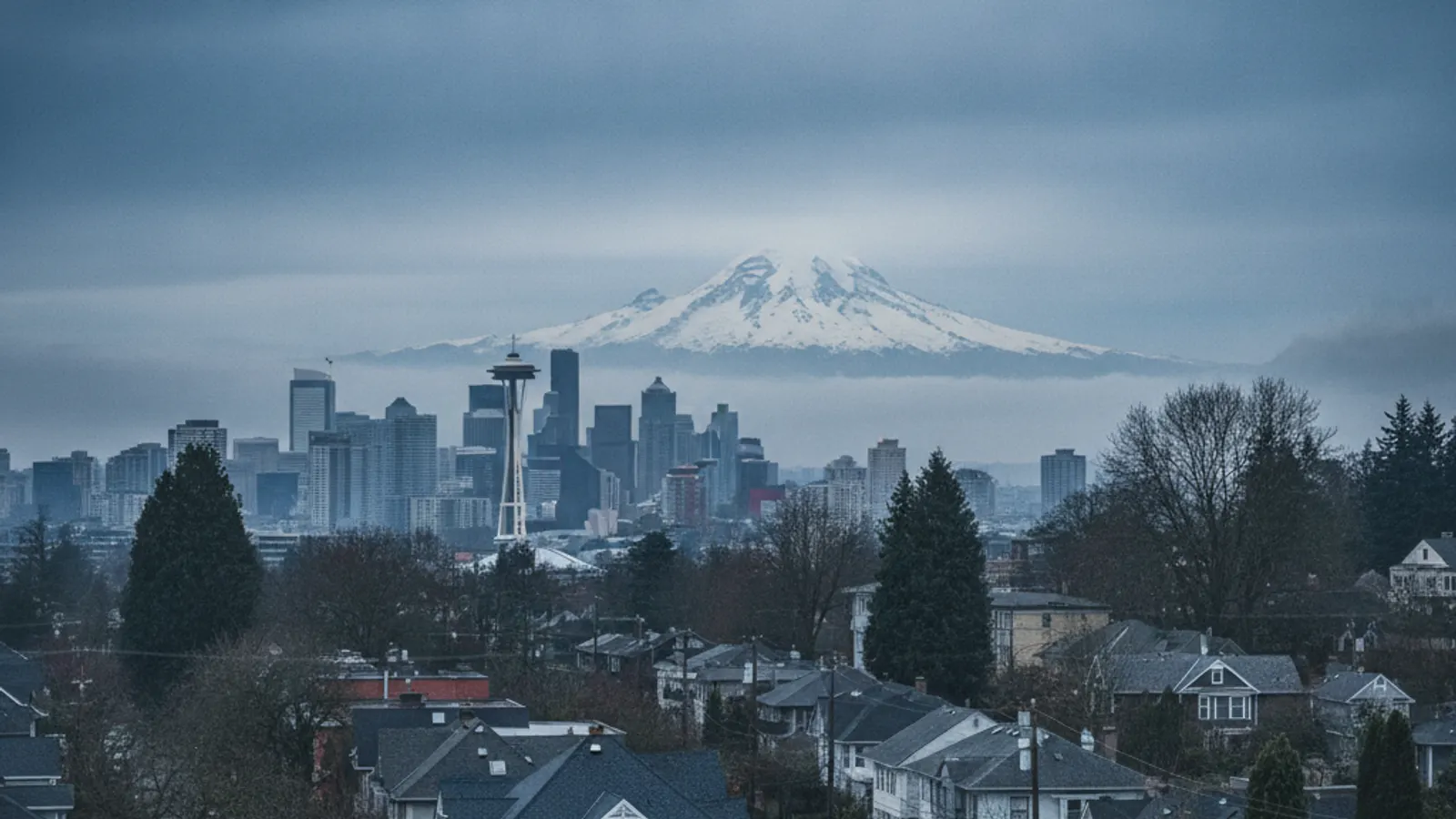
How Much Does a Heat Pump Cost in Seattle?
A ducted heat pump installation typically runs $8,000–$16,000 in the Seattle area (Angi's 2026 Seattle average is about $10,218), and ductless systems run $3,500–$6,000 for a single zone or $6,000–$15,000 for multi-zone. Before you anchor on those numbers: active Seattle City Light and Puget Sound Energy rebates take $1,500–$6,000 off qualifying conversions, which is why the rebate check should come first, not last.
Typical Seattle-area ranges
Ducted heat pump installation
$8,000 – $16,000 typical ~$10,200
All-electric heating + cooling using your existing ductwork
Angi's 2026 Seattle average is $10,218; complex retrofits and larger homes trend toward the top of the range. Utility rebates can take $1,500–$6,000 off — see rebates below.
Sources: HVAC Project Cost — Seattle, WA (citing Angi 2026) (2026) · WattFax — 113 WA homeowner quotes (2026)
Ductless mini-split (single zone)
$3,500 – $6,000
One outdoor unit + one indoor head — equipment, labor, electrical, permit
Angi's Seattle single-zone data runs wider ($1,200–$6,500) depending on equipment tier and electrical work.
Sources: Seattle Mini Split Pros cost guide (2026) · Angi — ductless mini-split cost, Seattle WA (2026)
Ductless mini-split (multi-zone)
$6,000 – $15,000
One or more outdoor units serving 2–4+ rooms
Roughly $6,000–$9,000 for two zones up to $10,000–$15,000 for four — layout and line-set runs drive the spread.
Sources: Seattle Mini Split Pros cost guide (2026) · Angi — ductless mini-split cost, Seattle WA (2026)
These are typical Seattle-area market ranges compiled from published cost guides (Angi, HomeGuide, and Seattle-area 2025–2026 cost studies) — market context, not a quote from Glendale Heating & Air Conditioning. Your home's size, equipment, ductwork, electrical, and permits change the number. National figures are marked; Seattle-area labor typically runs above national averages.
Why check rebates before you price a heat pump?
Because the programs are fuel-specific and contractor-specific. Seattle City Light offers instant discounts on qualifying heat pumps and up to $6,000 for oil-to-heat-pump conversions; PSE pays $1,500–$4,000 depending on whether you're converting from electric or gas heat. Most require a participating contractor — a DIY or out-of-network install can forfeit the entire rebate.
One caution for 2026: the federal 25C tax credit for heat pumps ended for equipment placed in service after December 31, 2025. If an ad still promises a federal credit, it's out of date. The Washington utility rebates above are real, active money — and we help you file for every one your project qualifies for.
Is a heat pump right for a Seattle home?
Usually, yes. Washington's mild winters sit comfortably inside a modern cold-climate heat pump's efficient operating range, so one system heats all winter and cools through the summer heat domes.
The engineering still matters: correct sizing requires a Manual J load calculation, your ductwork has to be verified (or a ductless layout designed), and your electrical panel needs the capacity — our technicians hold WA 06A electrical licenses, so panel and wiring questions get answered in the same visit.
What moves the price up or down?
Ducted vs. ductless
Using existing ducts is usually cheaper — if they're sound. Homes without ducts (or with failing ones) often do better with a multi-zone ductless layout than a $5,000–$15,000 duct retrofit.
Cold-climate performance (HSPF2)
Higher-efficiency equipment costs more and earns bigger utility discounts — Seattle City Light's instant discount grows through its HSPF2 8.1 / 8.5 / 9.5 tiers.
Electrical panel capacity
Full electrification sometimes needs panel or wiring upgrades. This is the single most common surprise cost in older Seattle homes — get it assessed up front.
What you're converting from
Oil, electric-resistance, and gas conversions each unlock different rebate programs with different amounts. The fuel you're leaving determines the money you can claim.
Permits and sales tax
Mechanical and electrical permits apply, and Washington's roughly 10% sales tax applies to equipment — honest quotes show both.
Active Seattle-area rebates (verified July 2026)
Heat pump instant discounts — $300–$600 instant
Seattle City Light · Qualifying air-source heat pumps — discount grows with efficiency (HSPF2 8.1 / 8.5 / 9.5 tiers)
Seattle Clean Heat (oil-to-heat-pump) — $2,000 — up to $6,000
City of Seattle · Replacing oil heat with a qualified heat pump (program equipment list applies)
Electric-to-heat-pump conversion rebate — $1,500 standard / $2,400 income-qualified
Puget Sound Energy · Replacing electric-resistance heat with a ducted or ductless heat pump
Gas-to-heat-pump conversion rebate — $3,000 — up to $4,000
Puget Sound Energy · Full fuel-switch from a gas furnace to a heat pump (gas heat removed/capped)
Hybrid heat pump rebate — $1,500 / $2,400 income-qualified
Puget Sound Energy · Heat pump paired with your existing gas furnace (dual-fuel)
Smart thermostat rebate — $75 / $175 income-qualified
Puget Sound Energy · ENERGY STAR smart thermostats with occupancy sensing
WA Home Electrification & Appliance Rebates (HEAR) — Varies by local program
WA Dept. of Commerce — via local administrators · Heat pumps, heat pump water heaters, panel/wiring upgrades
Program details verified July 2026 from utility and government sources (seattle.gov, pse.com, commerce.wa.gov, irs.gov). Amounts, equipment lists, and deadlines change and funds can run out — always verify current eligibility with the program before you buy. Note for 2026: the federal 25C/25D tax credits ended for equipment placed in service after Dec 31, 2025 (One Big Beautiful Bill Act) — beware of ads still promoting them. Glendale helps you identify and file for the programs your project actually qualifies for.
Check every program with the rebate finderAn honest quote includes
- A Manual J load calculation — not a square-footage guess
- Exact equipment model numbers with HSPF2/SEER2 ratings
- Every rebate you qualify for, named, with who files the paperwork
- Electrical work and permits priced up front
- One total — before and after rebates
Cost questions Seattle homeowners ask
How much does a heat pump cost installed in Seattle?
Typical Seattle-area ducted heat pump installations run $8,000–$16,000, with Angi's 2026 Seattle average around $10,218. Single-zone ductless systems run about $3,500–$6,000 and multi-zone systems $6,000–$15,000. Active utility rebates can take $1,500–$6,000 off qualifying conversions.
What heat pump rebates are available in Seattle right now?
As of July 2026: Seattle City Light offers $300–$600 instant discounts plus $2,000–$6,000 for oil-to-heat-pump conversions; PSE pays $1,500–$2,400 for electric conversions, $3,000–$4,000 for gas conversions, and $1,500–$2,400 for hybrid setups. Programs change and funds run out — we verify eligibility before you buy.
Do heat pumps work in Seattle winters?
Yes. Seattle's mild winters are ideal for modern cold-climate heat pumps, which heat efficiently through typical Pacific Northwest lows and also cool your home in summer. Correct sizing from a Manual J calculation is what makes the comfort and the efficiency real.
Can I still get the federal heat pump tax credit in 2026?
No — the federal 25C credit (up to $2,000 for heat pumps) was terminated for equipment placed in service after December 31, 2025. Washington utility rebates remain active and are the real savings for 2026 installs.
Is a heat pump estimate from Glendale free?
Yes — free estimates on new system installations, and free second opinions if you already have a quote in hand. We put the system design, the rebates, and one total in writing.
Ready for comfort you can count on?
Whether it's a furnace that quit on a cold morning or a whole new system, the Glendale team is ready. Honest pricing, expert work, and 87+ years behind every visit.
Hours & Emergency
- Mon–Sat: 8:00 AM – 7:00 PM
- Sun: Emergency On-Call Only
- Emergency line: (206) 243-7700